Let’s be honest—stump grinders look intimidating at first. Spinning teeth, loud engines, flying wood chips… yeah, they command respect. But once you understand how they work, running a stump grinder (whether it’s a small Dosko walk-behind or a big Vermeer track machine) is actually pretty straightforward.
This guide skips the dry manual language and explains things the way operators actually talk about them in the field.
First Things First: Safety Stuff (Don’t Skip This)
Before you even think about pulling a starter cord or turning a key, get your safety dialed in.
What you should always wear:
- Eye protection (full face shield is best)
- Hearing protection (these machines scream)
- Gloves
- Steel-toe boots
- Long pants (wood chips hurt… trust me)
Check the area:
- Clear rocks, debris, metal, and trash
- Make sure no one (or pets) are within 50–75 feet
- Call before you dig if the stump is near utilities
Dosko and Vermeer both design their machines with safety shields and guards—use them. If a guard is missing or damaged, don’t run the machine.
Know Your Machine Size
Not all stump grinders are created equal. How you run one depends heavily on whether it’s small, medium, or large.
Small Stump Grinders (Dosko Walk-Behind, Vermeer SC Series)
These are the homeowner or light-commercial machines. Think Dosko 200-6, Dosko 337, or Vermeer SC30TX (smaller end).
Best For
- Small to medium stumps
- Tight yards
- Gates and backyards
- New operators learning the ropes
How to Operate It
- Position the grinder
- Set the cutter wheel slightly off-center from the stump
- Lock the wheels if your model has brakes
- Start the engine
- Gas on, choke if cold
- Pull-start or electric start depending on model
- Lower the cutter wheel
- Ease it down—don’t slam it into the stump
- Side-to-side motion
- Sweep slowly left to right
- Let the teeth do the work
- Don’t force it or you’ll stall the engine
- Step down gradually
- Grind a few inches
- Lower the head
- Repeat until you’re 6–12 inches below grade
Pro Tip
Small grinders LOVE patience. If you push too hard, they’ll buck, chatter, or stall.
Medium Stump Grinders (Dosko 510, Vermeer SC60–SC70)
Now we’re in real tree-service territory. These machines have hydraulic cutter heads and more horsepower.
Best For
- Medium to large stumps
- Frequent use
- Residential and light commercial jobs
How to Operate It
- Set up square to the stump
- Use hydraulic controls to position the cutter wheel
- Engage parking brake
- Throttle up
- These machines like to run at operating RPM
- Half-throttle = bad grind quality
- Engage cutter wheel
- Ease into the stump
- Start from the side and work inward
- Controlled sweeps
- Smooth, even left-right motion
- Listen to the engine—if it bogs, slow down
- Go deeper
- Lower the head in stages
- Most Vermeer and Dosko mids can hit 12–16 inches deep
Pro Tip
Hydraulics are your friend. Smooth inputs mean less wear on belts, teeth, and bearings.
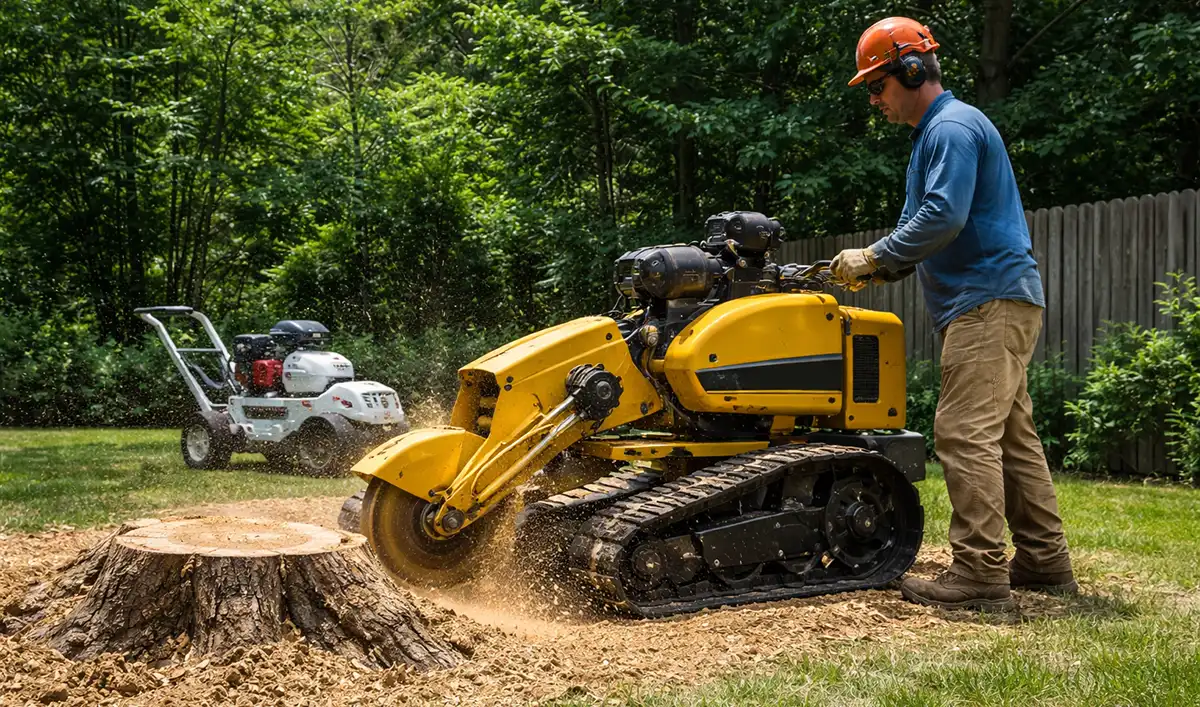
Large Stump Grinders (Vermeer Track Machines, Tow-Behind Units)
These are beasts. Machines like Vermeer SC852, SC1052, or big tow-behind units are made to chew through massive stumps all day.
Best For
- Large hardwood stumps
- Land clearing
- Municipal or high-volume work
How to Operate It
- Stabilize the machine
- Deploy outriggers if equipped
- Set tracks or wheels firmly
- Full RPM operation
- Large grinders must run at full speed
- Anything less beats up the cutter system
- Work methodically
- Start wide
- Work inward and downward
- Don’t rush—even big machines have limits
- Watch the discharge
- Wood chips fly FAR
- Adjust shields as needed
- Finish below grade
- 12–24 inches deep depending on the job
- Level out the hole when finished
Pro Tip
Big grinders don’t like sudden movements. Smooth control equals faster jobs and fewer repairs.
Grinding Technique That Actually Works
No matter the size or brand:
- Start on the side of the stump
- Grind across, not straight down
- Let the teeth cut—don’t force it
- Listen to the engine and cutter wheel
- Take breaks on massive stumps
Dosko machines are known for being tough and simple. Vermeer machines shine with smooth hydraulics and operator comfort. Either way, technique matters more than brand.
Common Rookie Mistakes
Avoid these and you’ll look like you’ve been grinding for years:
- ❌ Slamming the cutter wheel into the stump
- ❌ Running at low RPM
- ❌ Standing too close to the discharge
- ❌ Forgetting to check teeth condition
- ❌ Grinding straight down instead of side-to-side
After You’re Done Grinding
- Shut the machine down properly
- Inspect cutter teeth
- Clean out wood chips
- Grease fittings (especially on Dosko walk-behinds)
- Backfill hole if required
A little maintenance goes a long way with both Dosko and Vermeer machines.
Glenn’s Stump Grinder Rentals
-
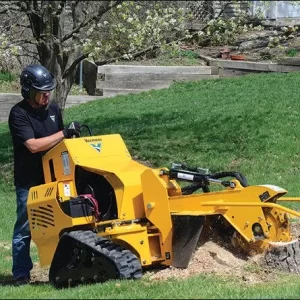
Large Stump Grinder Rental
$350.00 -
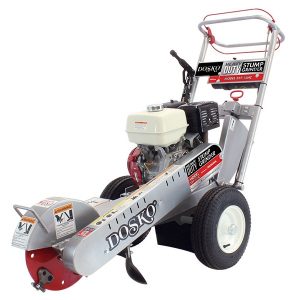
Medium Stump Grinder Rental
$300.00 -
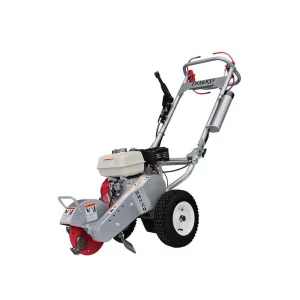
Small Stump Grinder Rental
$250.00
FAQs – Stump Grinder Basics
How deep should I grind a stump?
Most jobs call for 6–12 inches below ground level. Landscaping or replanting may need deeper.
Can I rent a stump grinder if I’ve never used one?
Running out isn’t usually dangerous, but it can allow air into the system. This may require purging or relighting appliances properly before reuse.
How long does it take to grind a stump?
Small stump: 10–20 minutes
Medium stump: 30–60 minutes
Large hardwood stump: 1–2+ hours
Do stump grinder teeth wear out fast?
They last longer than you think—unless you hit rocks, metal, or concrete.
Gas or diesel stump grinder—does it matter?
Gas is common for small/medium machines. Diesel dominates large Vermeer grinders for torque and longevity.
Is Vermeer better than Dosko?
They’re built for different users. Dosko is simple and rugged. Vermeer is smooth, powerful, and feature-rich. Both get the job done.
Final Thoughts on How to Operate a Stump Grinder
Running a stump grinder isn’t about brute force—it’s about control, patience, and listening to the machine. Whether you’re behind a small Dosko walk-behind or a massive Vermeer track grinder, the basics stay the same.
Respect the machine, grind smart, and you’ll be knocking out stumps like a seasoned pro in no time
Related Posts