Summary
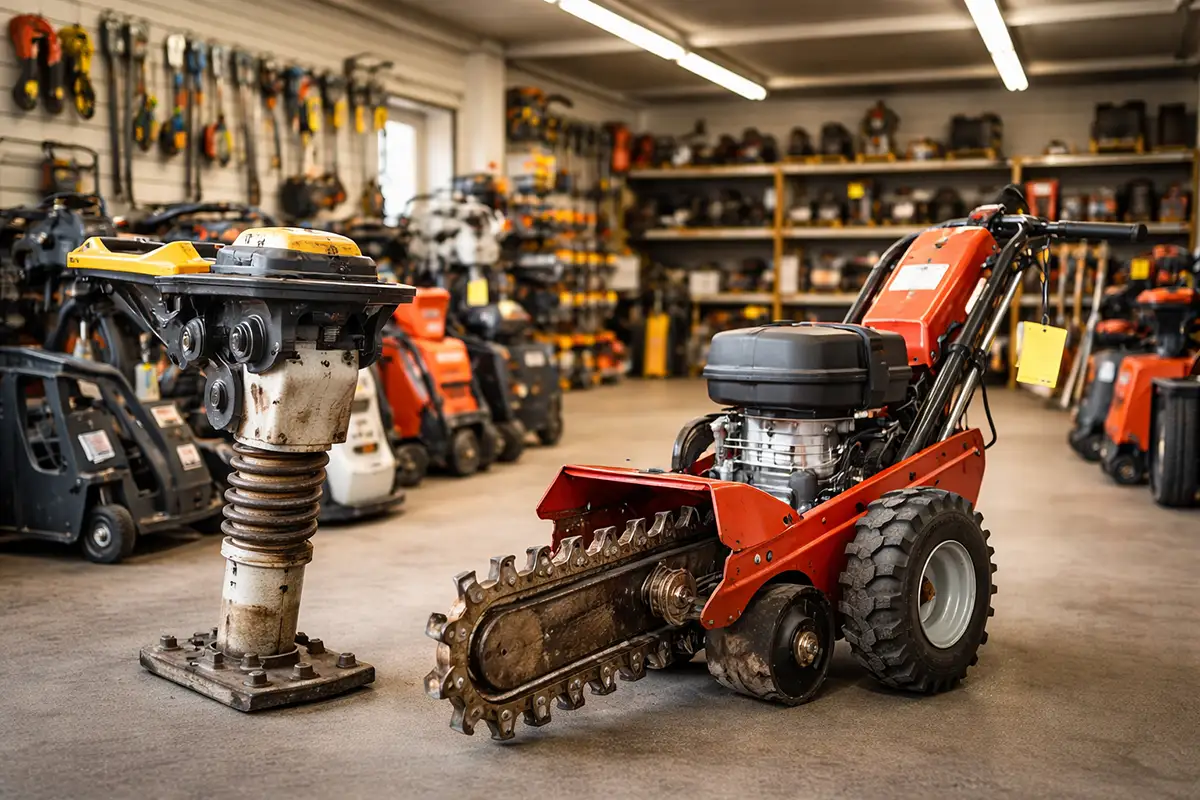
This article breaks down whether it’s better to rent or buy tools based on cost, usage frequency, and project type. It includes real-world cost comparisons, usage break-even tables, and highlights why heavy-duty equipment like trenchers and rammers are often better rented. It also considers geographic factors such as California’s Central Coast and provides local rental insights from Glenn’s Repair & Rental in Atascadero.
Is It Better to Rent or Buy Tools?
If you’ve ever started a home project or jobsite task, you’ve probably asked yourself: should I rent this tool, or just buy it?
It sounds like a simple question, but the answer depends on how often you’ll use the tool, how much it costs upfront, and even where you live.
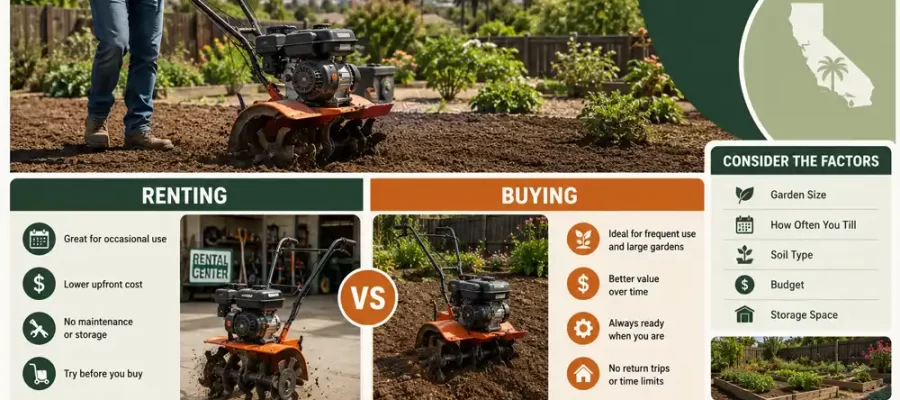
For most homeowners and even contractors, the truth is this: owning tools isn’t always the smartest financial move. In many cases, especially with specialized or heavy equipment, renting is the better option.
Let’s break it down in a practical, no-nonsense way.
The Core Difference: Renting vs Buying Tools
At the most basic level:
- Buying = higher upfront cost, long-term ownership
- Renting = lower upfront cost, pay only when needed
But the real decision comes down to usage and hidden costs.
When Buying Tools Makes Sense
Buying tools can be a good investment, but only under the right conditions.
You should consider buying if:
- You’ll use the tool frequently (10+ times per year)
- It’s relatively inexpensive
- Maintenance is minimal
- Storage isn’t an issue
Examples of Tools Worth Buying
- Drills and impact drivers
- Basic lawn equipment
- Hand tools
These are tools you’ll likely reach for again and again.
When Renting Tools Is the Smarter Choice
Here’s where things get interesting.
For many projects, especially outdoor construction or landscaping, renting wins almost every time.
Renting is better if:
- You only need the tool once or twice
- The tool is expensive
- It requires maintenance or fuel
- It’s bulky or hard to store
Examples Where Renting Makes More Sense
- Trenchers for digging utility lines
- Rammers for compacting soil
- Heavy-duty tillers or excavators
You can find both trencher rental and rammer rental options locally, which is far more practical than owning equipment you might only use once every few years.
Real Cost Comparison: Rent vs Buy
Let’s look at actual numbers.
Example: Trencher
| Cost Factor | Buying | Renting (Per Day) |
|---|---|---|
| Initial Cost | $2,500 – $5,000 | $150 – $300 |
| Maintenance (Annual) | $200 – $500 | $0 |
| Storage | Required | None |
| Break-even Point | ~15–25 uses | — |
If you only need a trencher for a weekend project, renting clearly wins.
Example: Rammer (Compactor)
| Cost Factor | Buying | Renting (Per Day) |
|---|---|---|
| Initial Cost | $1,500 – $3,000 | $80 – $150 |
| Maintenance | Moderate | None |
| Break-even Point | ~20 uses | — |
Again, unless you’re using it regularly, renting is the logical choice.
Break-Even Usage Table (Simple Guide)
This table gives you a quick way to decide:
| Tool Type | Purchase Cost | Rental Cost/Day | Break-Even Uses |
|---|---|---|---|
| Drill | $150 | $20 | 7–8 uses |
| Lawn Mower | $500 | $60 | 8–10 uses |
| Trencher | $3,000 | $200 | 15 uses |
| Rammer | $2,000 | $120 | 16–18 uses |
Rule of Thumb
If you won’t use a tool at least 10–15 times, renting is usually cheaper.
Hidden Costs Most People Forget
Buying tools isn’t just about the purchase price.
Ownership Costs Include:
- Maintenance and repairs
- Replacement parts
- Storage space
- Transportation
- Depreciation
Renting eliminates nearly all of these.
Does Location Matter? (Yes, More Than You Think)
Where you live plays a big role in this decision.
In California’s Central Coast (Atascadero and Surrounding Areas):
- Outdoor projects are common year-round
- Soil conditions vary (requiring specialized equipment)
- Storage space can be limited
Because of this, many homeowners in areas like Paso Robles, Templeton, and San Luis Obispo lean toward renting, especially for larger tools.
Local access to equipment from Glenn’s Repair & Rental makes renting even more convenient.
Project-Based Thinking: A Smarter Approach
Instead of thinking “Should I buy this tool?”, try asking: “Will I need this tool again soon?”
Examples
- Installing irrigation → rent a trencher
- Compacting soil for a patio → rent a rammer
- Weekly lawn care → buy a mower
This mindset saves money over time.
Environmental and Practical Benefits of Renting
Renting isn’t just about cost—it’s also practical.
Benefits
- Access to newer, well-maintained equipment
- No long-term storage issues
- Less waste from unused tools
- Try before you buy
Common Mistakes to Avoid
Choosing convenience over logic
Buying tools “just in case”
Underestimating maintenance costs
Ignoring storage limitations
FAQs Renting vs Buying Tools and Equipment
Is renting tools cheaper than buying?
Yes, in most cases, especially for tools used fewer than 10–15 times.
What tools should I always rent?
Heavy equipment like trenchers, rammers, and excavators are almost always better to rent.
When is buying worth it?
When you use the tool regularly and it has low maintenance costs.
Does renting include maintenance?
Yes, rental equipment is typically maintained by the provider.
Is renting tools convenient?
Very, especially with local providers serving areas like Atascadero and the Central Coast.
Can contractors benefit from renting too?
Absolutely. Renting helps reduce overhead and access specialized tools when needed.
Conclusion
So, is it better to rent or buy tools?
For most people, renting is the smarter, more flexible, and more cost-effective option, especially for large, expensive equipment. Buying only makes sense when you know you’ll use the tool regularly.
If you’re working on a project in California’s Central Coast, renting tools like trenchers and rammers can save you thousands while giving you access to professional-grade equipment when you actually need it.
Related Posts