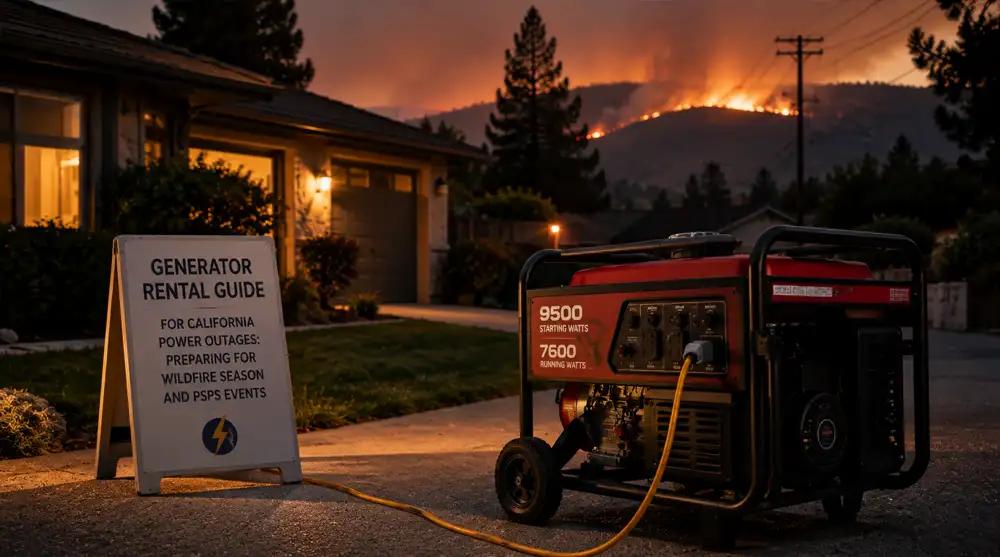
Summary: California’s fire season brings two related power problems for Central Coast homeowners: Public Safety Power Shutoffs that utilities schedule during high fire danger, and unplanned outages from wildfires themselves. Both can leave a household without power for hours or days with little warning. This guide covers what a PSPS is and why it happens here, the difference between portable and standby generators, how to decide between renting a generator for occasional use and buying one outright, and how to prepare before the next red flag warning rather than after the power already goes out. It also points to Glenn’s detailed generator sizing guide for readers who already know they need backup power and want to match wattage to their home’s needs.
Central Coast homeowners deal with a kind of power outage that much of the country does not: planned shutoffs. When fire danger spikes during hot, dry, windy stretches, utilities cut power to reduce the risk of equipment sparking a wildfire. Glenn’s fleet sees a predictable surge in generator rental calls every time a red flag warning goes up, and the households that plan ahead of that call are the ones who actually get a generator before the fleet runs low.
Why California Homes Lose Power During Fire Season
A Public Safety Power Shutoff is a preventive measure, not a repair outage. Utilities de-energize lines in areas at elevated fire risk during specific weather conditions, and San Luis Obispo County falls within the footprint where this happens during peak season. Unlike a storm outage that utility crews are actively working to fix, a PSPS is a scheduled event with a start time announced in advance and an end time that depends on weather conditions clearing. Outages can run from a few hours to several days, and they tend to hit inland and hillside areas harder than coastal towns.
On top of PSPS events, an active wildfire nearby can knock out power unpredictably regardless of whether a shutoff was scheduled. Both situations point to the same practical conclusion: a household that wants reliable power through fire season needs a plan in place before the outage starts, not after.
Portable Generators vs. Standby Generators
Portable generators are the most common choice for renters and for homeowners who only need backup power occasionally. They run on gasoline or propane, sit outside the home, and connect to specific appliances through extension cords or a transfer switch wired to key circuits. They are the practical option for covering a refrigerator, some lighting, a well pump, and a few outlets through a multi day PSPS event.
Standby generators are permanently installed, wired directly into the home’s electrical panel, and start automatically when the power drops. They cost significantly more upfront and require professional installation, but they cover the entire house without any manual setup during an outage. For most homeowners dealing with occasional PSPS events rather than year round unreliable power, a portable generator sized correctly for essential circuits covers the need without the investment a standby system requires.
Renting a Generator vs. Buying One
The rent versus buy decision usually comes down to frequency. A household that loses power a handful of times per fire season, and otherwise has no use for a generator, typically comes out ahead renting each time rather than owning a generator that sits unused most of the year. Rented units also arrive properly maintained and ready to run, which matters during a PSPS when there is no time to troubleshoot a generator that has not been started since the previous season.
Buying makes more sense for households in areas with frequent or extended outages, for anyone who wants power available the moment an outage starts without arranging a rental, or for contractors and landscapers who need a generator on job sites regularly in addition to storm backup at home. Glenn’s carries a range of Honda generators for both rental and purchase, viewable in the generator rental inventory.
Sizing a Generator to Your Home’s Needs
Matching wattage to actual load is the step that determines whether a generator handles an outage smoothly or trips constantly under demand. The math depends on which appliances need to run at once, with startup wattage for anything containing a motor, like a refrigerator or well pump, running higher than its continuous running wattage. Glenn’s generator rental size guide walks through this calculation in detail and is the right next stop for anyone ready to match a specific wattage to their home’s circuits.
Preparing Before the Next Red Flag Warning
The households that get through a PSPS smoothly are almost always the ones who prepared before fire season started rather than after the first outage warning. That means testing a generator under real load early in the season rather than assuming it will start, keeping fuel fresh since gasoline degrades over a matter of weeks, and having extension cords or a transfer switch ready to go. Anyone planning to rent rather than buy should reserve a unit ahead of a forecast red flag warning, since rental demand climbs sharply once a shutoff is announced and availability tightens fast.
For households weighing generator ownership against other backup options, Glenn’s broader rent or buy guide covers the general decision framework that applies to generators along with other equipment.
Generator Rentals Serving Atascadero and the Central Coast
Glenn’s Repair & Rental keeps Honda generators in stock for both rental and purchase at 5025 El Camino Real in Atascadero, serving Paso Robles, Templeton, San Luis Obispo, Morro Bay, and Pismo Beach. The team helps match generator size to household needs and can also service a generator that will not start, covered in more detail in the small engine repair guide. Call 805-466-2218 to check current generator availability, especially ahead of forecast fire weather.
Frequently Asked Questions
What is a PSPS and why does it affect Central Coast homes?
A Public Safety Power Shutoff, or PSPS, is a planned outage utilities use during periods of high fire danger, typically hot, dry, and windy conditions, to reduce the risk of downed power lines sparking a wildfire. San Luis Obispo County sits in an area where these shutoffs happen during peak fire season, and outages can last anywhere from several hours to a few days.
Should I rent or buy a generator?
Renting makes sense for households that only need backup power a few times a year during PSPS events or storms. Buying makes more sense for anyone who wants power available at a moment’s notice without arranging a rental each time, or who needs a generator regularly for job sites.
What size generator do I need for my house?
Sizing depends on which appliances and circuits need power during an outage. Glenn’s full breakdown of wattage requirements and generator sizing is available in the generator rental size guide, and the team can also help match a generator to your needs over the phone at 805-466-2218.
Can a portable generator power my whole house?
A portable generator can run essential circuits such as the refrigerator, well pump, some lighting, and a few outlets, but it typically cannot run an entire house at once unless paired with a transfer switch and sized for the full electrical load. A standby generator, permanently installed and wired into the home’s panel, is built to cover the whole house.
How do I prepare a generator for wildfire season before an outage happens?
Test the generator under load before fire season starts, not after the first PSPS warning arrives. Confirm fuel is fresh, check the oil level, and make sure extension cords and any transfer switch equipment are on hand. Anyone planning to rent should reserve a generator ahead of red flag warning days, since rental demand rises sharply once a PSPS is announced.
Related Posts